
 135-6073-0094
PRODUCT CENTER
Locking Products
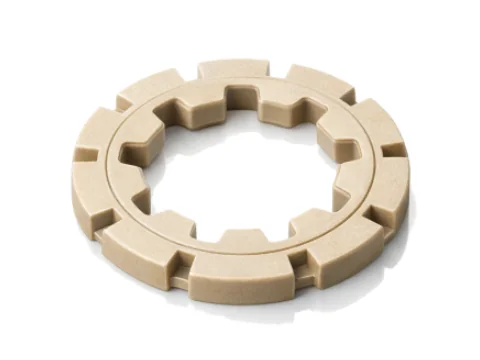
Spline washer with a nylon element: the spline grips the par
Spline Nylon Washer
- MaterialSpring Steel 65Mn
- Installationfitted as a pair with cams facing
- StandardGB/T 94.1, ISO 16130 (transverse vibration)
- Typical substratewind, construction and rail structures
- Key inspectionstooth height, hardness, locking performance
Product overviewOverview
Conical washers instead use a dished spring form to maintain clamp force and compensate relaxation, while double-toothed washers rely on tooth bite for anti-rotation. The spline teeth anchor the washer to the clamped surface and the nylon layer absorbs micro-slip that would otherwise wear the joint. The nylon also isolates the washer from the part, which is useful where a galvanic pair has to be broken.
Material: Spring Steel 65Mn. The two washers are fitted as a pair with the cams facing each other.
Key featuresFeatures
- Nylon layer damps micro-slip and separates dissimilar metals.
- Conical washers maintain clamp force where thermal cycling relaxes the joint.
- Double-toothed washers combine anti-rotation with load spreading.
- 65Mn spring steel quenched and tempered, with hardness and elasticity controlled.
Typical applicationsApplications
- Construction machinery structures
- Rail bogies and running gear
- Automotive chassis and driveline
Selection notesSelection
Check the temperature at the joint: nylon softens well below the service limit of the steel, so it is not a choice for hot assemblies.
Frequently asked questionsFAQ
Can a nylon washer be used at high temperature?
What matters during installation of the Spline Nylon Washer?
| Material | Spring Steel 65Mn |
|---|---|
| Surface Treatment | Black oxide / Zinc-plated |
| Standard | GB/T 94.1, ISO 16130 (transverse vibration) |
| Installation | fitted as a pair with cams facing |
| Typical substrate | wind, construction and rail structures |
| Key inspections | tooth height, hardness, locking performance |
Locking performance is verified by transverse vibration testing such as ISO 16130, recording preload decay.Alternative materials and finishes can be quoted side by side during sampling, so cost and corrosion resistance can be traded off explicitly.