
 135-6073-0094
PRODUCT CENTER
Thread Inserts
Key-locking inserts that drive keys into the base material f
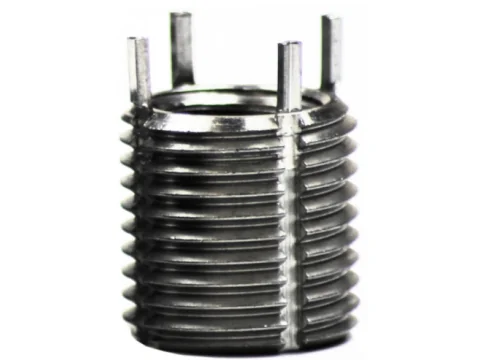
Tang-Drive Thread Insert for Light Alloy Substrates
- MaterialStainless Steel / Carbon Steel
- Installationdriven in, then keys pressed into the base material
- StandardGB/T 197, company standard (key-locking)
- Typical substratealuminium and other low-strength bases
- Key inspectionskey depth, torque resistance, thread gauging
Product overviewOverview
A key-locking insert carries keys or a key ring on its external thread. After the insert is driven in, a tool presses the keys into the base material, creating a mechanical stop against rotation. Unlike a wire insert held by friction, torque resistance here comes from shear in the keys, so it does not depend on thread preload — the reason these inserts are chosen for heavy loads and repeated assembly.
Material: Stainless Steel / Carbon Steel. It is driven in, then the keys are pressed into the base material.
Key featuresFeatures
- Keys shear against the base material, so anti-rotation does not rely on friction.
- Suits heavy-duty threads in aluminium and other low-strength bases.
- Internal and external threads held coaxial for smooth bolt engagement.
- Matching installation tool and keys supplied to control setting depth.
Typical applicationsApplications
- Aluminium structural joints
- Rail and heavy equipment
- Mould and fixture thread repair
Selection notesSelection
Avoid key-locking inserts in thin walls: pressing the keys generates radial force that can split the wall.
Frequently asked questionsFAQ
How do I specify the Tang-Drive Thread Insert for Light Alloy Substrates?
What matters during installation of the Tang-Drive Thread Insert for Light Alloy Substrates?
| Material | Stainless Steel / Carbon Steel |
|---|---|
| Standard | GB/T 197, company standard (key-locking) |
| Installation | driven in, then keys pressed into the base material |
| Typical substrate | aluminium and other low-strength bases |
| Key inspections | key depth, torque resistance, thread gauging |
Key slot dimensions and key clearance are sampled; both threads are gauged.We recommend a pilot assembly at the actual torque and mating part before locking the process parameters for volume.