
 135-6073-0094
PRODUCT CENTER
Precision Micro Screws
Hex-socket countersunk micro screws whose 90° head seats in
Hexagon Socket Countersunk Head Screws
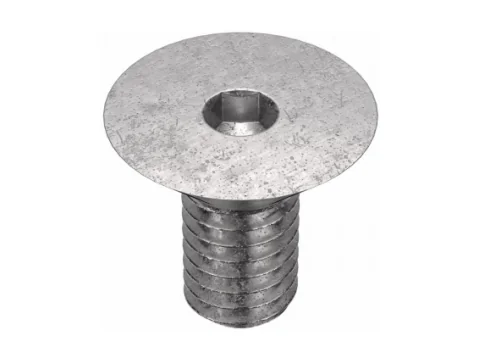
- Installationhex key or electric driver
- StandardGB/T 70.3 (hex socket countersunk), GB/T 3098.1
- Typical substratesheet-metal covers, instrument bases
- Key inspectionshead angle, recess depth, thread gauging
- Head TypeCountersunk (Flat)
- Head stylecountersunk 90°
Product overviewOverview
A countersunk screw centres itself on the 90° cone: as it tightens, the cone generates a radial component that aligns the screw, and the final clamp is carried by face contact between head and countersink. Compared with a cylindrical head, the load spreads over a larger cone area, which lowers contact pressure — but only if the countersink angle matches the head. A mismatch turns face contact into line contact and crushes the hole edge.
installed by hex key or electric driver.
Key featuresFeatures
- 90° cone seats in a matching countersink, leaving the surface flush.
- Hex socket carries higher torque, suitable for structural joints from M2 to M6.
- Cone centring reduces assembly eccentricity compared with a pan head.
- 6g thread tolerance for use with 6H internal threads; locking patches optional.
Typical applicationsApplications
- Sheet-metal covers and faceplates
- Robot joint housings
- Instrument base plates and guide rails
Selection notesSelection
Countersink angle must equal the head angle (90° is standard); depth should follow the head diameter table, since an over-deep sink shortens the clamp length.
Frequently asked questionsFAQ
How do I specify the Hexagon Socket Countersunk Head Screws?
What matters during installation of the Hexagon Socket Countersunk Head Screws?
| Head Type | Countersunk (Flat) |
|---|---|
| Standard | GB/T 70.3 (hex socket countersunk), GB/T 3098.1 |
| Head style | countersunk 90° |
| Installation | hex key or electric driver |
| Typical substrate | sheet-metal covers, instrument bases |
| Key inspections | head angle, recess depth, thread gauging |
Head angle is checked on a profile projector, and cone-to-shank concentricity against drawing tolerance.We recommend a pilot assembly at the actual torque and mating part before locking the process parameters for volume.