
 135-6073-0094
PRODUCT CENTER
Riveting Products
Flat head half-hex rivet nut: part of the flange is hexagona
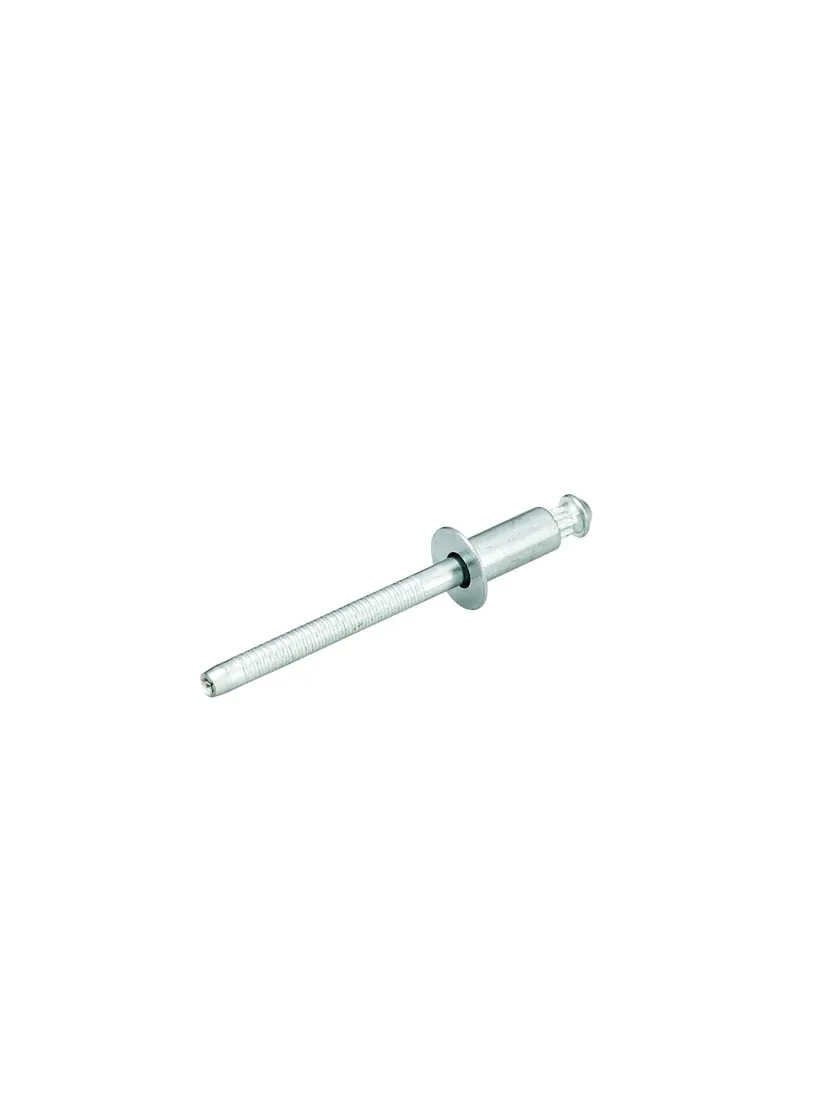
Flat Head Half Hex Rivet Nut
- MaterialCarbon steel / Stainless 304/316
- FinishZinc plated / Plain
- Installationset from one side with a rivet-nut tool
- StandardGB/T 17880, ISO 15977
- Typical substratesheet 0.5–3 mm, extrusions, castings
- Key inspectionsbulge formation, thread gauging, setting load
Product overviewOverview
A rivet nut combines a thread and a rivet in one part: the barrel is threaded inside, and the tail is a deformable wall. A half-hex flange gives the setting tool something to grip on part of the circumference. That matters most on thin sheet, where the nut tends to spin with the setting tool because there is little material for the bulge to grip.
Material: Carbon steel / Stainless 304/316, with zinc plated / plain as the standard finish. It is set from one side with a rivet-nut tool.
Key featuresFeatures
- Half-hex flange can be held by a fixture to stop spinning on thin sheet.
- Setting from one side leaves a bulge behind the sheet, so box sections and tubes need no rear access.
- The 6H internal thread takes repeated bolt cycles, and because nothing is welded the sheet keeps its flatness.
- The flat head sits on the surface, the countersunk version sinks flush, and the hex head gives a wrench a second way to hold it.
Typical applicationsApplications
- Enclosures and sheet-metal cabinets
- Automotive body and chassis attachments
- Rail interior and equipment brackets
Selection notesSelection
Choose barrel length from sheet thickness, head style from the mounting face, then size from load; if thickness is outside the grip range, change the part rather than raising setting force.
Frequently asked questionsFAQ
Half hex or full hex rivet nut?
What matters during installation of the Flat Head Half Hex Rivet Nut?
| Material | Carbon steel / Stainless 304/316 |
|---|---|
| Finish | Zinc plated / Plain |
| Standard | GB/T 17880, ISO 15977 |
| Head style | hex head |
| Installation | set from one side with a rivet-nut tool |
| Typical substrate | sheet 0.5–3 mm, extrusions, castings |
| Key inspections | bulge formation, thread gauging, setting load |
Internal threads are gauged 6H on every part, with destructive bulge tests sampled.We recommend a pilot assembly at the actual torque and mating part before locking the process parameters for volume.