
 135-6073-0094
PRODUCT CENTER
Riveting Products
Large flange knurled rivet nut: the wide head spreads surfac

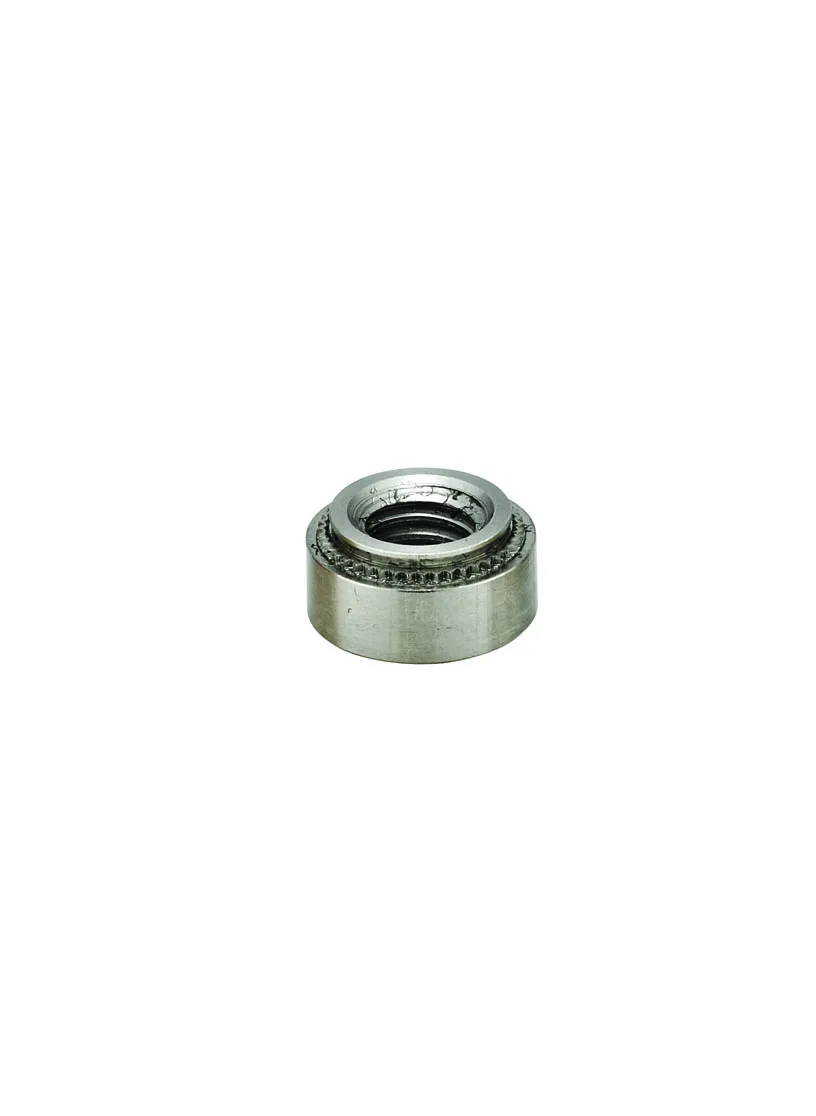
Large Flange Head Knurled Rivet Nut
- MaterialCarbon steel / Aluminum
- FinishZinc / Nickel
- Installationset from one side with a rivet-nut tool
- StandardGB/T 17880.2
- Typical substratesheet 0.5–3 mm, extrusions, castings
- Key inspectionsbulge formation, thread gauging, setting load
Product overviewOverview
A rivet nut combines a thread and a rivet in one part: the barrel is threaded inside, and the tail is a deformable wall. Increasing the head diameter lowers the surface pressure for the same clamp load, so appliance panels and thin aluminium are not dented. The knurl runs along the barrel and forms several lines of engagement with the hole wall, giving more torque resistance than a smooth barrel.
Material: Carbon steel / Aluminum, with zinc / nickel as the standard finish. It is set from one side with a rivet-nut tool.
Key featuresFeatures
- Wide head lowers surface pressure; vertical knurl resists rotation.
- Zinc-plated carbon steel or 304/316 stainless, chosen to the environment.
- Grip range and hole size must match the size table; an oversized hole reduces clamp.
- Single-side installation with a back-side bulge, suited to closed sections.
Typical applicationsApplications
- Rail interior and equipment brackets
- Battery pack enclosures
- Appliances and elevator panels
Selection notesSelection
Keep the head diameter inside the clearance circle of the fixing point, and check that the head does not cover an adjacent hole on a narrow panel.
Frequently asked questionsFAQ
Why does a large head protect a thin panel?
What matters during installation of the Large Flange Head Knurled Rivet Nut?
| Material | Carbon steel / Aluminum |
|---|---|
| Finish | Zinc / Nickel |
| Standard | GB/T 17880.2 |
| Head style | flanged |
| Installation | set from one side with a rivet-nut tool |
| Typical substrate | sheet 0.5–3 mm, extrusions, castings |
| Key inspections | bulge formation, thread gauging, setting load |
Coating thickness follows GB/T 5267.1 and salt spray GB/T 10125.Material certificates and dimensional records accompany each lot; material and dimensional records are supplied per batch.