
 135-6073-0094
PRODUCT CENTER
Riveting Products
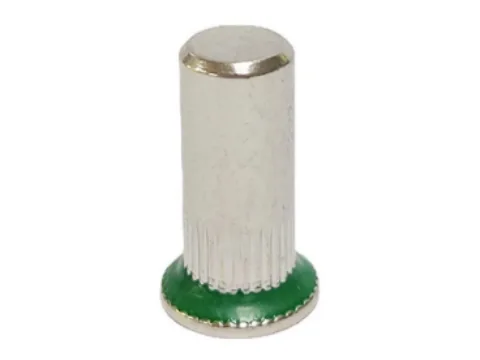
Type 71 flush knurled sealing rivet nut: a knurled barrel fo
Type 71 Flush Knurled Sealing Rivet Nut
- MaterialCarbon Steel / Stainless Steel
- Installationset from one side with a rivet-nut tool
- StandardGB/T 17880.1–.4 (blind rivet nuts)
- Typical substratesheet 0.5–3 mm, extrusions, castings
- Key inspectionsbulge formation, thread gauging, setting load
Product overviewOverview
A rivet nut combines a thread and a rivet in one part: the barrel is threaded inside, and the tail is a deformable wall. The knurl resists rotation and the flange face carries the seal. Because the knurl is on the barrel and the seal on the flange, the two cannot substitute for each other: a knurled barrel with a scored flange face will still leak, and a good seal on a smooth barrel will still spin.
Material: Carbon Steel / Stainless Steel. It is set from one side with a rivet-nut tool.
Key featuresFeatures
- Knurl for grip, flange face for sealing: two separate functions.
- Flat, countersunk and hex heads differ in where the bearing face lands and in how the body is held during setting.
- Annealed tail concentrates deformation where intended for a consistent bulge.
- Zinc-plated carbon steel or 304/316 stainless, chosen to the environment.
Typical applicationsApplications
- Appliances and elevator panels
- Enclosures and sheet-metal cabinets
- Automotive body and chassis attachments
Selection notesSelection
Choose barrel length from sheet thickness, head style from the mounting face, then size from load; if thickness is outside the grip range, change the part rather than raising setting force.
Frequently asked questionsFAQ
Can the knurl take the place of the seal?
What matters during installation of the Type 71 Flush Knurled Sealing Rivet Nut?
| Material | Carbon Steel / Stainless Steel |
|---|---|
| Type | Rivet nut |
| Standard | GB/T 17880.1–.4 (blind rivet nuts) |
| Installation | set from one side with a rivet-nut tool |
| Typical substrate | sheet 0.5–3 mm, extrusions, castings |
| Key inspections | bulge formation, thread gauging, setting load |
Bulge diameter and clamp height are measured after setting against the process window.Alternative materials and finishes can be quoted side by side during sampling, so cost and corrosion resistance can be traded off explicitly.