
 135-6073-0094
PRODUCT CENTER
Riveting Products
Self-clinching nut for general sheet assembly: the nut is pr
Self-Clinching Nut
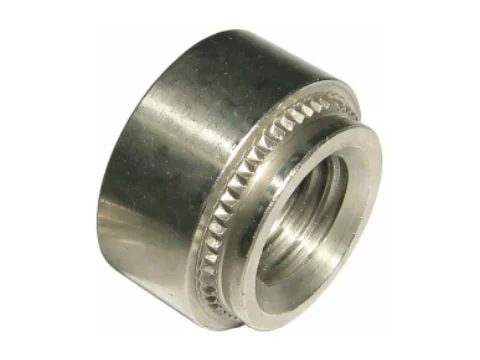
- MaterialCarbon Steel / Stainless Steel
- Installationpressed into a prepared hole with a clinching press (single side)
- StandardGB/T 90.1 (acceptance), customer drawing
- Typical substratecold-rolled steel, stainless and aluminium sheet 0.5–3 mm
- Key inspectionspush-out, torque-out, face flushness
Product overviewOverview
The joint is sensitive to hole size and sheet hardness. Push-out and torque-out are set by how much sheet material fills the undercut, so the three variables are hole size, sheet hardness and press force. Of these, hole size is the one that drifts in production, and it is the usual cause of a nut that turns after assembly.
Material: Carbon Steel / Stainless Steel. It is pressed into a prepared hole with a clinching press, working from one side.
Key featuresFeatures
- Hole size drift is the usual cause of a nut turning after assembly.
- Annular undercut and knurl: sheet metal flows in to form a mechanical interlock.
- Push-out and torque resistance come from metal shear and knurl bite.
- Flush face after pressing suits panels and housings that must stay flat.
Typical applicationsApplications
- Appliance and elevator control boxes
- Instrument housings
- Server and telecom rack panels
Selection notesSelection
Control hole size with a gauge rather than by drill nominal, and re-check push-out whenever the sheet supplier or gauge changes.
Frequently asked questionsFAQ
Why does a clinch nut fail push-out in service?
What matters during installation of the Self-Clinching Nut?
| Material | Carbon Steel / Stainless Steel |
|---|---|
| Surface Treatment | Zinc-plated / Stainless steel finish |
| Standard | GB/T 90.1 (acceptance), customer drawing |
| Installation | pressed into a prepared hole with a clinching press (single side) |
| Typical substrate | cold-rolled steel, stainless and aluminium sheet 0.5–3 mm |
| Key inspections | push-out, torque-out, face flushness |
Push-out and torque tests are sampled per lot, with failure load recorded.We recommend a pilot assembly at the actual torque and mating part before locking the process parameters for volume.