
 135-6073-0094
PRODUCT CENTER
Sealing Products
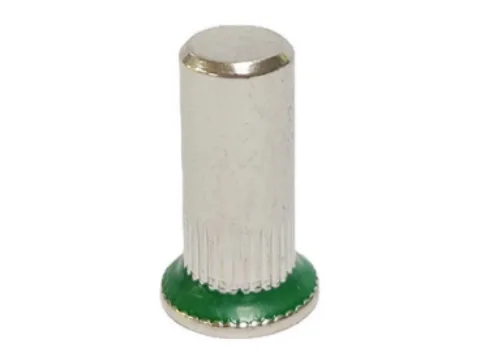
Type 71 flush knurled sealing rivet nut in the sealing range
Type 71 Flush Knurled Sealing Rivet Nut with Knurl Anti-Rotation and Flange Seal
- MaterialStainless Steel / Brass
- Installationset from one side with a rivet-nut tool
- StandardGB/T 17880.1–.4 (blind rivet nuts)
- Typical substratesheet 0.5–3 mm, extrusions, castings
- Key inspectionsbulge formation, thread gauging, setting load
Product overviewOverview
A rivet nut combines a thread and a rivet in one part: the barrel is threaded inside, and the tail is a deformable wall. The knurl and the flange seal are separate features doing separate jobs. Sealing comes from continuous compression of the coated flange face against the panel; the knurl only stops the nut turning while the bolt is tightened, and its teeth leave channels that do not seal.
Material: Stainless Steel / Brass. It is set from one side with a rivet-nut tool.
Key featuresFeatures
- Flange face seals, knurl only resists rotation.
- Blind setting forms the bulge against the far wall, which is what makes the seal practical on closed sections.
- The 6H thread tolerates repeated dismantling, and with no weld there is no heat distortion to flatten the sealing face.
- A flat head presents a gasket face, a countersunk head sits level with the panel, and a hex head lets a fixture hold the body while the bolt turns.
Typical applicationsApplications
- Automotive body and chassis attachments
- Rail interior and equipment brackets
- Battery pack enclosures
Selection notesSelection
Choose barrel length from sheet thickness, head style from the mounting face, then size from load; if thickness is outside the grip range, change the part rather than raising setting force.
Frequently asked questionsFAQ
Does the knurled barrel help sealing?
What matters during installation of the Type 71 Flush Knurled Sealing Rivet Nut?
| Material | Stainless Steel / Brass |
|---|---|
| Sealing Method | Pre-applied sealant / O-ring |
| Standard | GB/T 17880.1–.4 (blind rivet nuts) |
| Installation | set from one side with a rivet-nut tool |
| Typical substrate | sheet 0.5–3 mm, extrusions, castings |
| Key inspections | bulge formation, thread gauging, setting load |
Internal threads are gauged 6H on every part, with destructive bulge tests sampled.We recommend a pilot assembly at the actual torque and mating part before locking the process parameters for volume.